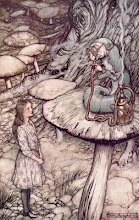
- If the stage scene should no longer exist in order to imitate or impersonate a pre-existing material reality, then what should it look like?
- Metaphor of the scene as a machine (a physical construct that theatrically locates and enables the public act of performance)
- Buhnenbildner - The stage picture-maker
- The metaphor and the implications of the scene as machine still have considerable contemporary relevance.
- Edward Gordon Craig
- Craig emphasized the mechanical reality of the stage constructions.
- Craig's screens function within performances, firmly established the idea of the scene as machine.
- Represents places that the act of performances are indicated. In this way, the screens created a place for performances that might represent imaginatvely simultaneously responding to the movements of the actor.
- Craig's belief in the aesthetic and functioning of the screens underpinned his shows.
- The act of living performance as it encountered the imagination of the audience. He suggests that the act of theatre takes place upon this liminal place of meeting, and that therefore the arts of scenography and architecture must combine to create these places that generate the potnetial for performance.
- Appia's drawings reveal little.
- Appia's scenographies for Wagner's music dramas are machinese for performance and like any good machine they work in intimate partnership with those who control their perception in time.
- The artist must explore seemingly abstracted neutral surfaces. The should understood that the physical scenography would be given form, colour, texture and possibly even dimension by the use of light. While light gives the actor the life of the story on stage.
Saturday, May 30, 2009

The Stage is a Dangerous Machine
by Aronson
George Tyspin has emerged as the primary designer of the postmodernism movement.
His range of work is astonishing. a film that he has designed is called The Cabinet of Dr. Ramirez.
He also recreated an environment for a one man show of his design-inspired sculptures at the Twining Gallery in New York.
He was awarded an Obie for his design work.
Metal is his favorite material because it is a material capable of sleek beauty and strength but also capable of distortion and decay.
There is usually a physical danger on his sets. A good example of the way he uses metal is in the Opera "The Electrification of the Soviet Union".
He received an MFA in design from New York University in 1984 at age of thirty.
His work style is the hallmark of the so-called postmodern style. His approach is organic.
His set design is different, he concentrates on the architecture or the props and the buildings on the stage.
Tyspin would rather do theater than movies because theater is more imaginative and film is more realistic. The imaginary space that you don't see onstage is the actual life essence of the show. He take time to create his sets and this sets him apart from all the American designer.
He puts a lot of love into his models of the sets.
He thinks European productions are more daring than American productions and he wants to get away from safe.
Glass has a lot of poetry in it ans goes to the heart of theater it take light in such a beautiful way.
Directors and actors envision the world differently.
George Tyspin has emerged as the primary designer of the postmodernism movement.
His range of work is astonishing. a film that he has designed is called The Cabinet of Dr. Ramirez.
He also recreated an environment for a one man show of his design-inspired sculptures at the Twining Gallery in New York.
He was awarded an Obie for his design work.
Metal is his favorite material because it is a material capable of sleek beauty and strength but also capable of distortion and decay.
There is usually a physical danger on his sets. A good example of the way he uses metal is in the Opera "The Electrification of the Soviet Union".
He received an MFA in design from New York University in 1984 at age of thirty.
His work style is the hallmark of the so-called postmodern style. His approach is organic.
His set design is different, he concentrates on the architecture or the props and the buildings on the stage.
Tyspin would rather do theater than movies because theater is more imaginative and film is more realistic. The imaginary space that you don't see onstage is the actual life essence of the show. He take time to create his sets and this sets him apart from all the American designer.
He puts a lot of love into his models of the sets.
He thinks European productions are more daring than American productions and he wants to get away from safe.
Glass has a lot of poetry in it ans goes to the heart of theater it take light in such a beautiful way.
Directors and actors envision the world differently.
Friday, May 29, 2009
The World on Stage notes
- the stage is a reflection of the world
- In theater it might not show the whole life cycle of the character
- In both life and on stage every object has a meaning to it or a representation
- How the viewers view an object might be very different then the actors
- Viewers might have knowledge that the actors don’t
- illusions might be presented to the viewer for an in depth view of the actors mind
- Macbeth is one play that used these styles of creating illusions
- Wording in theater is written to express the up most feeling to show the audiences
- A stage show might not be realistic to real life yet the similarities is around every corner
- Usage of “double vision” help enhance the effects
- Various effects has been put to use such as smokes and mirrors
- With drama, there is a more usage of suspension and disbelief
- Stage animals are used to reflect the real world
- Animals might be trained or put to sleep for the set
- Some people are surprised by the fact that a real dog is in the play
- With all the props and stage its always up to the actors to tell the story
- An act could be viewed as a piece of art if one choose to see it that way
- The process of preparing for the stage is not seen but only what is shown to the audience
- To create a play as if it was a reality show whit you along every step
- Montigny begins insisting that the stage is resubliming more and more like the real world
- With more knowledge of the play would then the actors be able to present it more realistically
- Each of the ideas and knowledge behind theater can be trace be in history
- In theater it might not show the whole life cycle of the character
- In both life and on stage every object has a meaning to it or a representation
- How the viewers view an object might be very different then the actors
- Viewers might have knowledge that the actors don’t
- illusions might be presented to the viewer for an in depth view of the actors mind
- Macbeth is one play that used these styles of creating illusions
- Wording in theater is written to express the up most feeling to show the audiences
- A stage show might not be realistic to real life yet the similarities is around every corner
- Usage of “double vision” help enhance the effects
- Various effects has been put to use such as smokes and mirrors
- With drama, there is a more usage of suspension and disbelief
- Stage animals are used to reflect the real world
- Animals might be trained or put to sleep for the set
- Some people are surprised by the fact that a real dog is in the play
- With all the props and stage its always up to the actors to tell the story
- An act could be viewed as a piece of art if one choose to see it that way
- The process of preparing for the stage is not seen but only what is shown to the audience
- To create a play as if it was a reality show whit you along every step
- Montigny begins insisting that the stage is resubliming more and more like the real world
- With more knowledge of the play would then the actors be able to present it more realistically
- Each of the ideas and knowledge behind theater can be trace be in history
Notes: Richard Foreman as Scenographer
Richard Foreman as Scenographer:¨ Said to be like “no other design work of the American theatre, now or in the past”¨ Text, Character, language, sound, space, thought, décor are all aspects of a single entity in Foreman’s world.
¨ Sets evoke a sense of wonder and exhilaration because of his attention to detail and juxtaposition of images and objects.
¨ Likes to make the entire stage ( every inch) participate in the moment because he assumes the spectator is watching the whole stage at all moments of the play.
¨ Tends to direct “ frontally”. Which is achieved in part through the employment of multiple framing devices, setting the stage off from each the audience as well as differentiating objects and performers from each other within the stage space.
¨ Likes to have his sets with a homemade quality about them.
¨ Somber, monochromatic color schemes are common, such as browns, blacks and grey.
¨ When he uses bring colors, such as red, they are muted and flat.
¨ The somber quality is reinforced by strange and eerie lighting that helps illuminate the darkness of the stage
¨ He typically has elements of Victoriana- lamps, overstuffed furniture, fringe etc, that create haunting echoes of a bygone era. Which is supposed to make the audience feel a sense of nostalgia and a sexual aura.
¨ “ props play a crucial role in the productions and it is often individual props that will linger in the spectators mind ling after seeing a play, such as dolls heads, skills, legal pads on clip boards, and armoire, globe etc.”
¨ Making the familiar strange lies at the root of his theatre, not terror, per se.
¨ Element that is most identified as Foremanesque: String.
¨ Strings crisscross the space of the stage and even the auditorium to connect objects and points within the space.
¨ Strings frame, focus, they function as line of force or energy, and inevitable, they disrupt the field of vision.
¨ Foreman’s most ideal set is his living room. “ I wish I could just get it (the stage) to feel visually, like this room where I am sitting”
¨ His designs all establish two forms of energy, two tensions. There are reverberating ideas and images that bounce around the contained space of the stage.
¨ Thrives for the state of involved observation, “ being at a party but not being involved in the festivities”
¨ 1970’s- 1980’s used devices such as shining lights into the spectators eyes and harsh noises. More recently has started using sheets of Plexiglas hung in front of the stage. Clear, but gives the sense of its presence. Like viewing the play through a window.
¨ Claims many of the intent or meaning to particular visual choices is purely just by accident.
¨ Compares the process of designing is similar to the process of writing, “ the scenographic environment evolves through thumbnail sketches, to a rough model to the final version.
¨ If he could have it his way, he would prefer to start rehearsing with out any set, and then later decide what the set would be, but he can’t accomplish this because of time constraints.
-Stacy
Thursday, May 28, 2009
Video of Seasons
So I was trying to find a clip that I saw on Planet Earth of the transition of summer to fall to winter from an aerial view of a forest. I haven't had luck yet finding that specific clip but I'm going to keep searching because it was truly AWESOME. But, I did find this video that was just cool in general but it also had a similar scene of the tree transformation. Make sure to watch around 6 min 45 seconds.
http://www.youtube.com/watch?v=QcCXYU8Gdg0
enjoy!- Stacy
getting work done!
The Mad Patterns had a very long meeting tonight to work on our live design project some more. I think we accomplished a lot but still have a lot to do to make sure that we blow you away with our presentation. :) I hope everyone caught my pun. ( I am the wind...)
Good Job today group!!
-Stacy
A few more random drawings

 Here are a few more that I drew.
 I drew a snowman because we were doing our presentation on fall to winter and I had been thinking of wintery things. The flower is just because I was thinking about spring time.
-Stacy
Subscribe to:
Posts (Atom)